
Asking loved ones to repeat themselves is a small frustration, right?
Maybe you find yourself nodding and smiling in a group setting, hoping the answer you give is appropriate because you only caught half the question. You tell yourself, “It’s just background noise” or “I’ll deal with it later.”
If you are minimizing your hearing struggles, you are not alone; many people delay addressing hearing challenges for years due to concerns about cost or stigma, or simply because they believe the issue isn't significant enough to warrant attention.
However, postponing treatment carries a heavy burden: With the delay comes a host of hidden costs that accumulate over time, affecting not just your hearing health, but your overall health and well-being.
The financial price of modern hearing solutions is often far outweighed by the long-term, detrimental effects that untreated hearing loss has on your brain, your relationships, and your overall health.
Your Brain Is Working Overtime: The Cognitive Drain
You might think hearing challenges are primarily a problem with the ears, but the most significant impact is often felt in your brain. After all, your ears do the hearing, but your brain does the listening!
When sound enters your ears, it travels to your brain for processing. If the information arriving is incomplete or distorted due to hearing loss, your brain has to work harder to decipher the incomplete signals and fill in the missing gaps.
This intense, constant effort is called listening fatigue, where you feel tired after focusing on listening to the conversation for so long.
Listening fatigue and cognitive drain affect you in several important ways:
You Feel Exhausted: You expend massive mental energy just trying to keep up with the conversation around you, especially in busy spaces like restaurants. This leaves you feeling disproportionately tired and stressed at the end of the day, which may lead to you avoiding social situations altogether.
The Link to Cognitive Decline: Scientific studies have established a strong association between untreated hearing loss and an increased risk of cognitive decline and dementia. When your brain is constantly diverting resources to listening, it has less energy available for crucial tasks like memory, focus, and executive function. You can proactively protect your future cognitive health by treating your hearing today.
By seeking a professional solution, you can rest assured that you are giving your brain the full, rich sound input it needs to focus on remembering names, enjoying conversations, and thinking clearly, instead of exhausting itself just to hear.
The Emotional and Social Toll: Isolation & Anxiety
The impact of untreated hearing loss rarely stays confined to your ears; it quickly spreads to affect your relationships and emotional stability.
When communication becomes a constant struggle, you might unconsciously begin to withdraw from the activities you once loved. It’s simply easier to stay home than to face the anxiety of struggling to hear at a restaurant, a theater, or a friend’s house.
This can lead to deepening social isolation and loneliness, which are serious health risks in themselves.
It’s also crucial to understand that you are not the only one paying a price. Your spouse, children, or friends will likely begin to worry about your safety and your declining participation in family life.
As well, your family members may become frustrated when they have to repeat themselves constantly or feel you are not paying attention. Hearing loss can result in important details, announcements, or emotional cues being missed, which can lead to arguments and resentment.
However, you can rebuild trust and connection by taking steps to hear better. Treating your hearing challenges is a gift of clearer communication to everyone around you, allowing you to return to being an active, confident participant in your relationships.
Limiting Your Potential: Professional & Safety Risks
Your ability to effectively participate in the professional world often relies heavily on clear communication.
If you are missing key information during important meetings, struggling with phone calls, or avoiding collaborative projects, your career advancement and earning potential could be limited. You deserve to succeed without unnecessary communication barriers holding you back.
There are also times when hearing is a matter of immediate safety: the honk of a car horn, the beep of a fire alarm, or vital instructions in an emergency can make or break a dangerous situation. You gain peace of mind knowing that you can detect critical warning sounds in your environment, protecting both yourself and your loved ones.
Don't Let the Hidden Costs Add Up
The challenge of hearing loss is not simply a matter of volume; it’s something that affects your quality of life, cognitive health, and social connections. And the longer you wait to seek help, the more those hidden costs begin to accumulate.
You have the power to stop this accumulation today by addressing your hearing challenges with our expert team.
Treating hearing challenges is a vital investment in your overall health, your future cognitive well-being, and your relationships. The first, simplest, and most important step you can take is to fully understand your hearing health with a comprehensive hearing assessment.
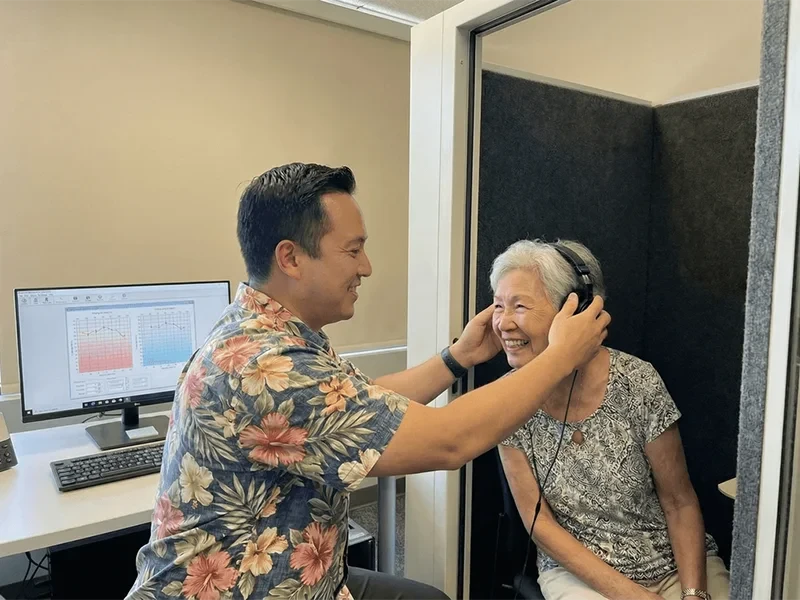
Don't wait for the hidden costs to become unbearable. Contact us at Ko'olau Audiology today to schedule your comprehensive hearing evaluation and start your journey back to effortless communication and connection.
Frequently Asked Questions
What are the main "hidden costs" of not treating hearing loss?
The hidden costs of untreated hearing loss extend far beyond simply missing conversations. The three main categories are: Cognitive Drain: Increased mental effort (resulting in listening fatigue) and a potential link to cognitive decline. Emotional & Social Toll: Social withdrawal, isolation, anxiety, and strain on relationships. Professional & Safety Risks: Limited career advancement/earning potential and the danger of missing critical warning sounds like alarms and vehicle horns.
How does untreated hearing loss affect the brain?
Is it just an issue of volume, or is there more to it?